Moonboon
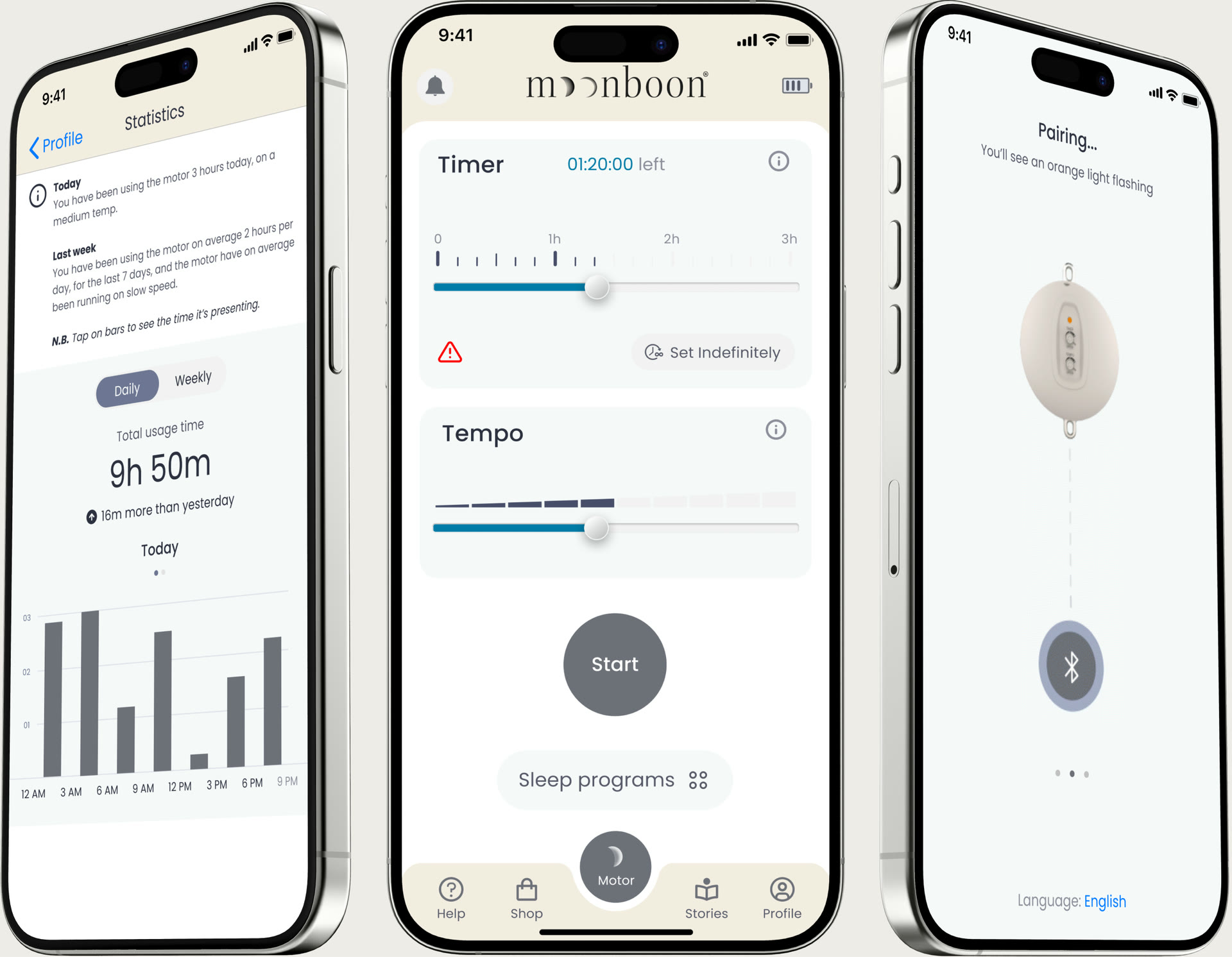
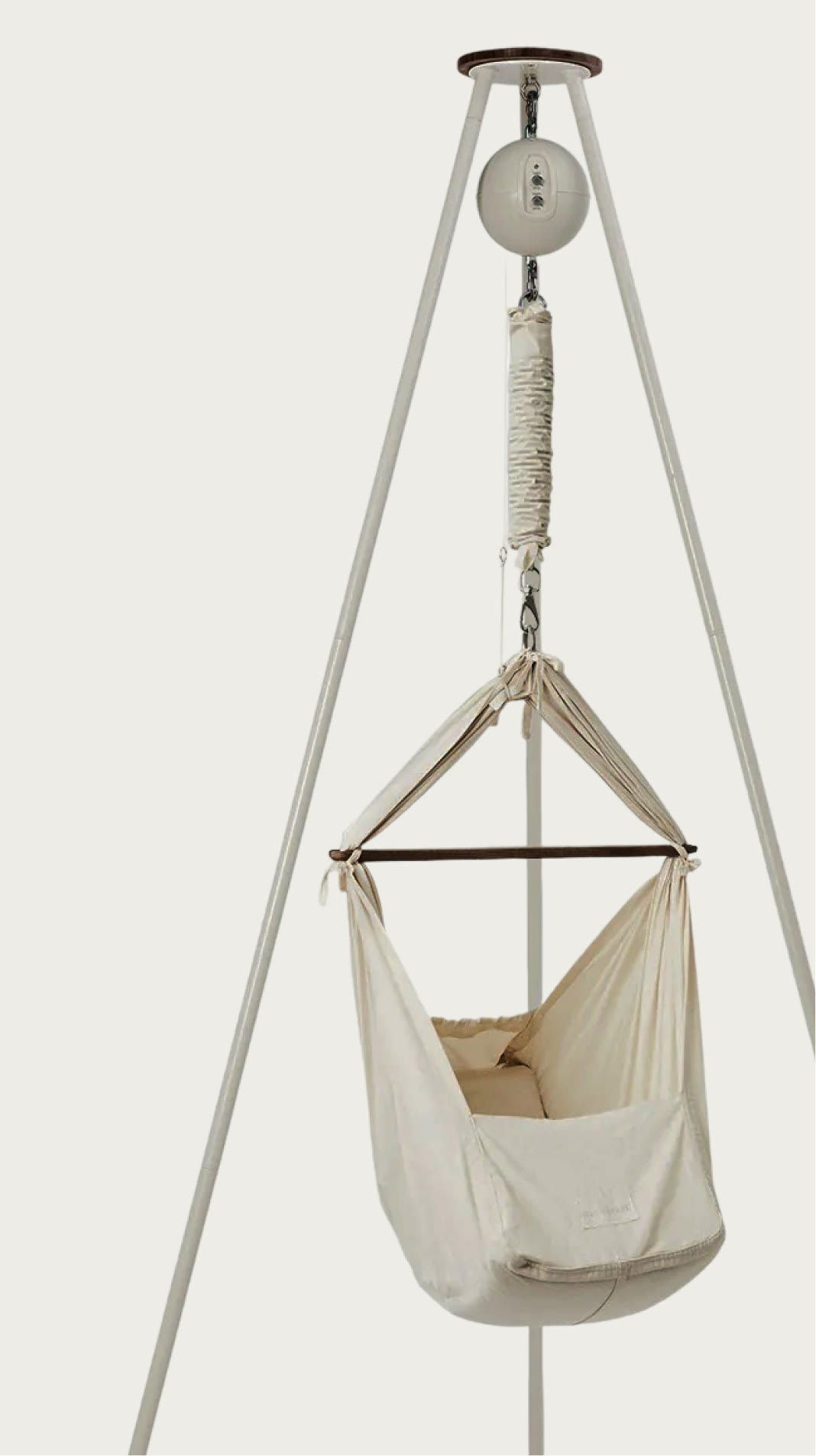
Designed the app that turned a manual baby hammock into a smart, phone-controlled one.
- User retention
- +20%
- Platforms designed
- 3
01 / Role
From benchmark to interaction design
Owned
- Competitive benchmark
- Wireframing
- Visual design
- Interaction design
With Devs, in recurring checks on technical feasibility
02 / Process
Benchmark, design, test, adapt, build
-
01
Benchmark
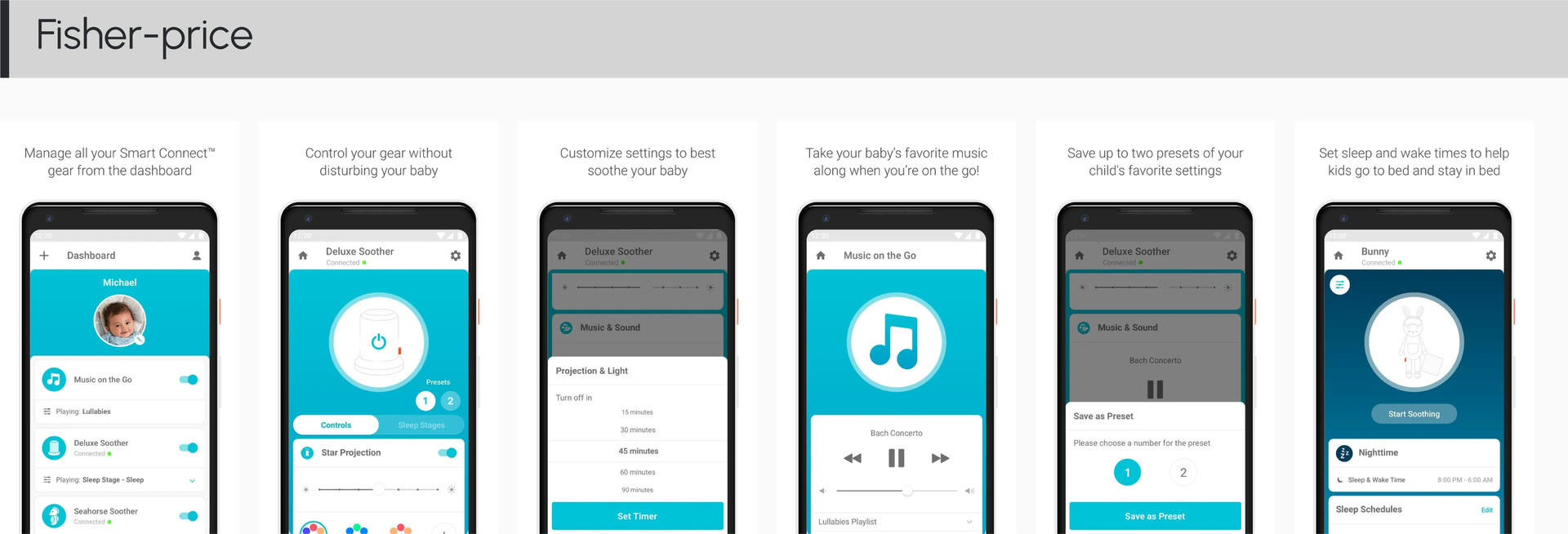
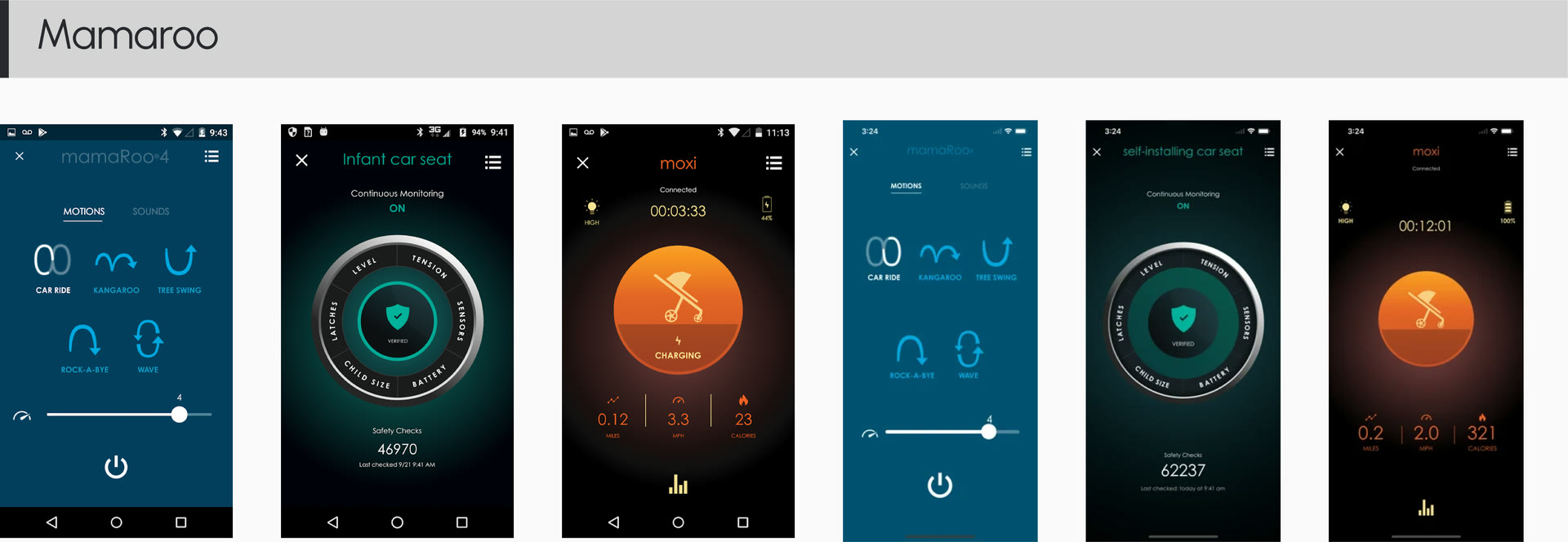
Studied Fisher-Price, Mamaroo and Sleep Monitor apps for control, safety, usage data and presets.
-
02
High fidelity first
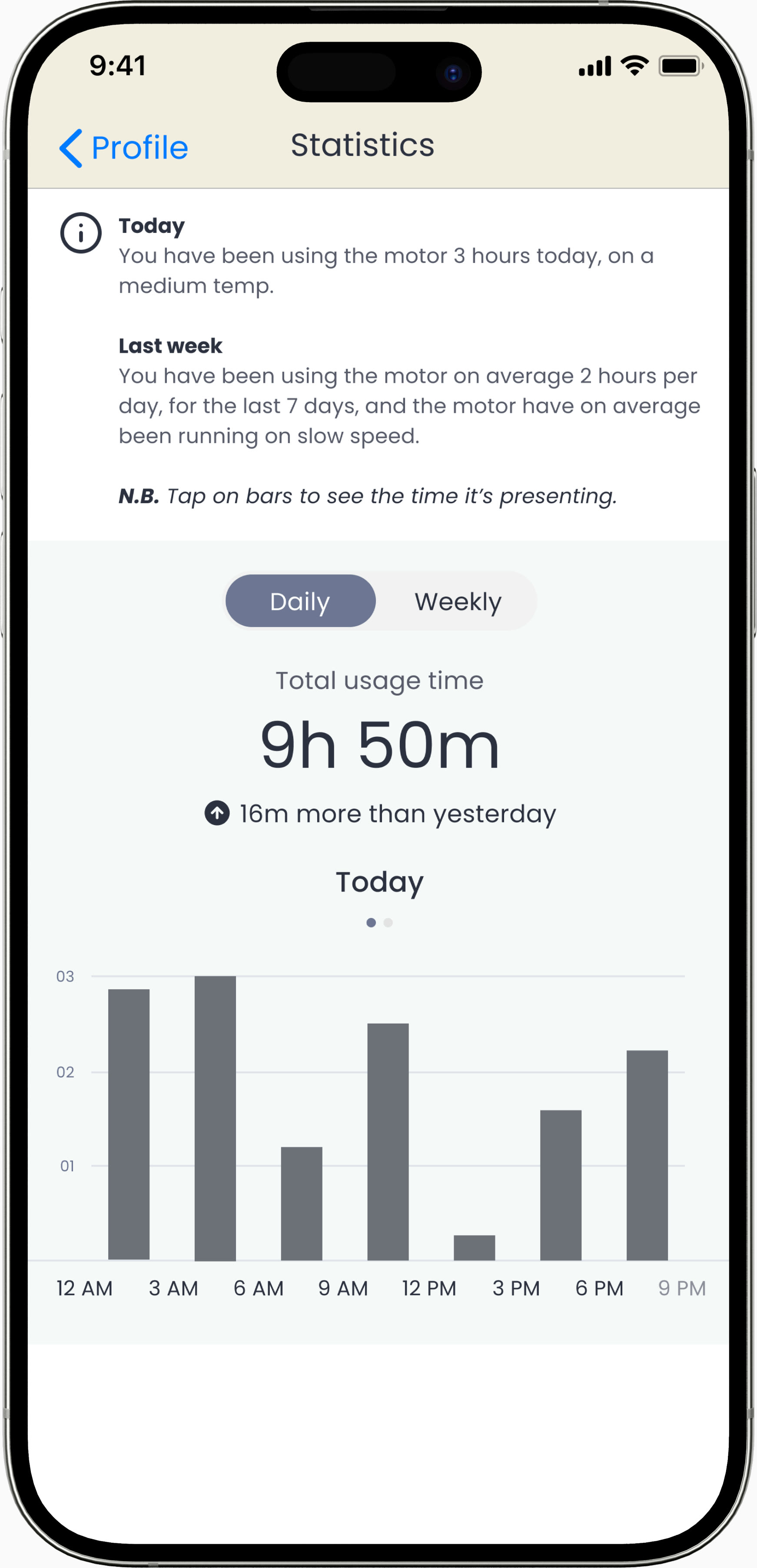
Went straight to high-fidelity Home, Statistics, Profile and Saved Control screens.
-
03
Test and refine
Tested with users after every design and iterated on their feedback and usage data.
-
04
iOS, then Android
Designed iOS first, where most users were, then Android on Material Design guidelines.
-
05
Build with devs
Checked technical feasibility with devs throughout, through to the beta app.
03 / Redesign
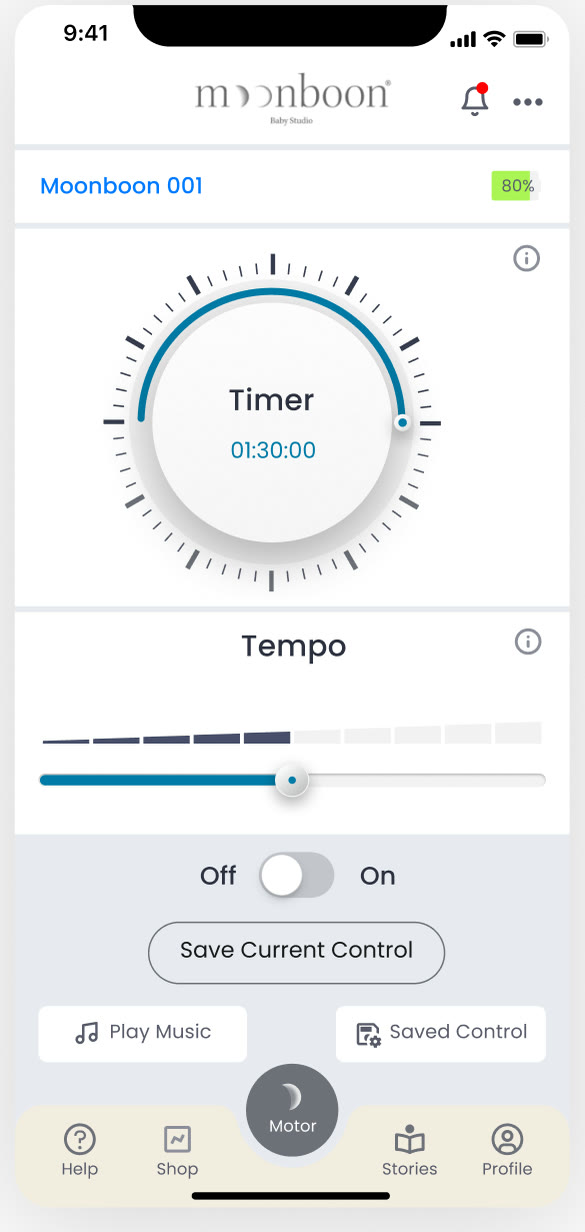
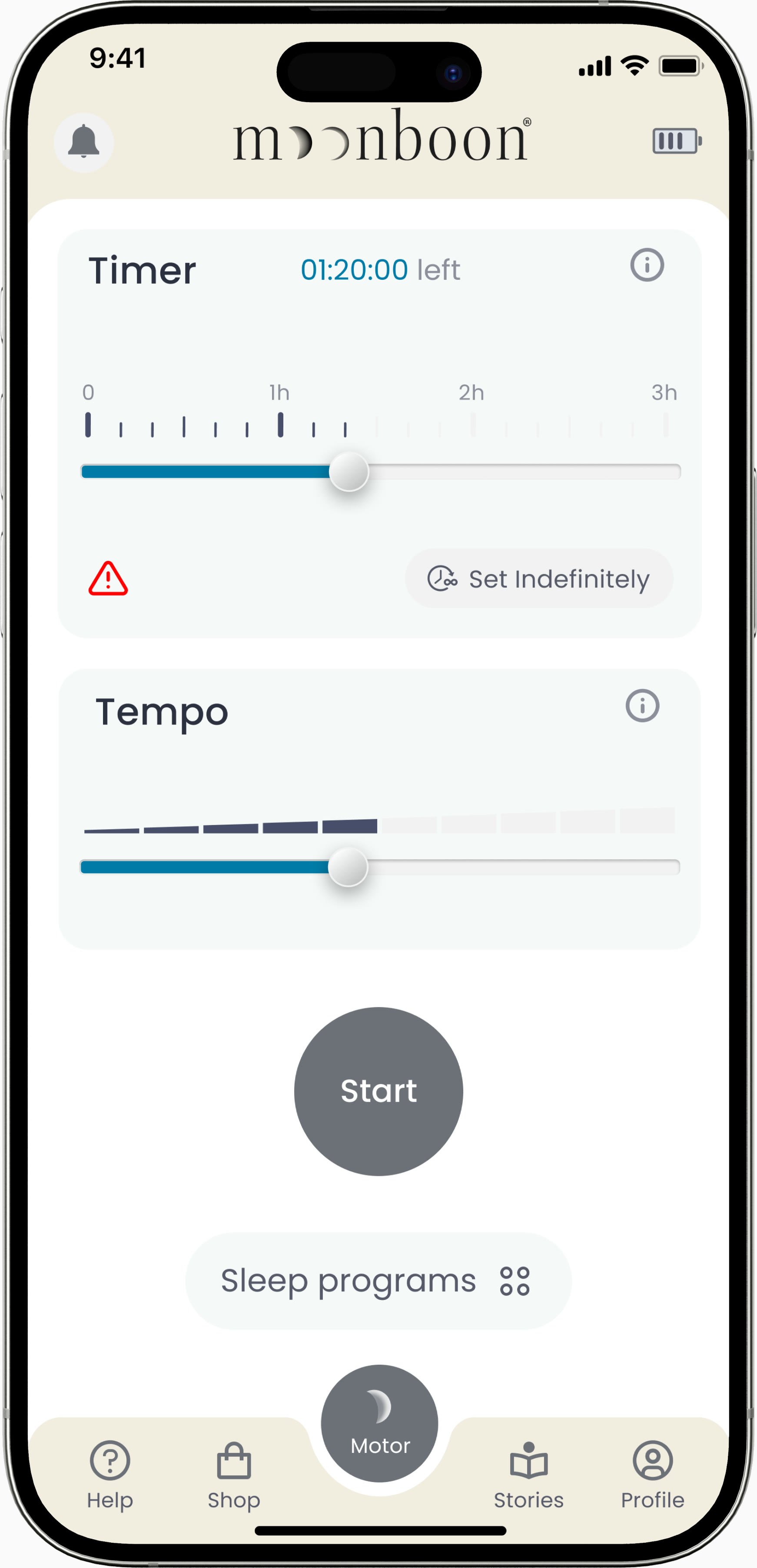
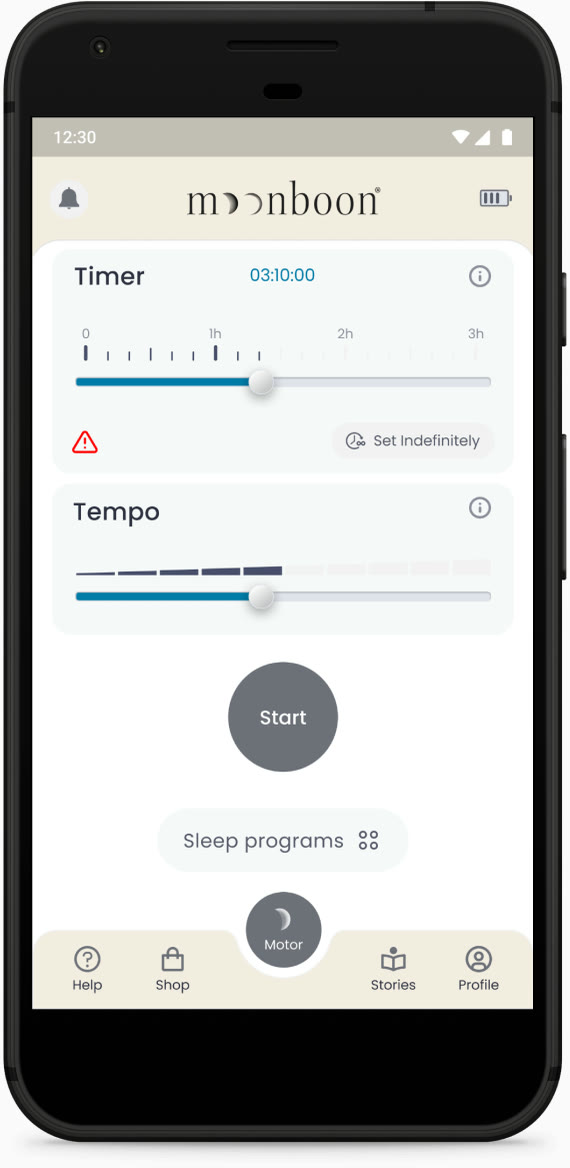
Home screen, simplified after testing
After each user test, we simplified Home with sliders and large buttons.
04 / Blocker and recovery
Blocker and recovery
Blocker
Firmware, load speed and a committed deadline
The app had to integrate with the hammock's physical firmware and release inside a committed timeline. Load speed was also a problem on some screens.
Recovery
Recurring dev check-ins and three trade-offs
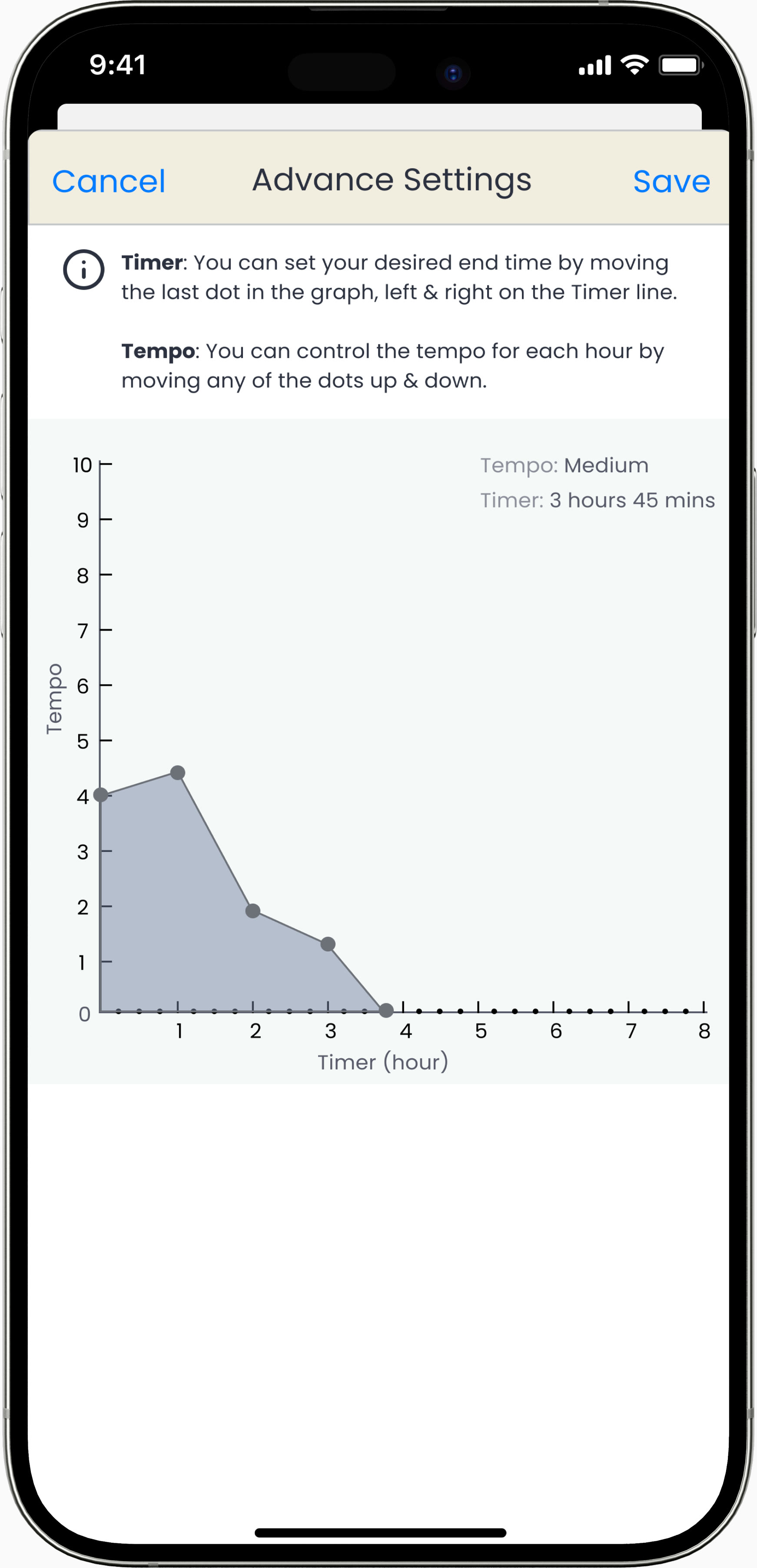
Some screens became PWA for load speed, Advanced settings became a scalable chart instead of a bar, and pop-over triggers followed each platform's guidelines.
Recovered by me and the team
05 / Impact
From manual hammock to smart device
The app put the manual hammock under phone control, and Moonboon got its first admin panel for devices, users and staff.
- User retention
- +20%
- The first end-to-end app and CRM contributed to the lift
Learnings
- Finish the firmware before the app; it saves post-production time and cost.
- Ship fewer features: overload slows load times and drives users away.
- Build a design system early, so the work stays efficient and easy to scale.

